Under-Counter Arithmetic: The Real Lifetime Cost of Integrated Appliances
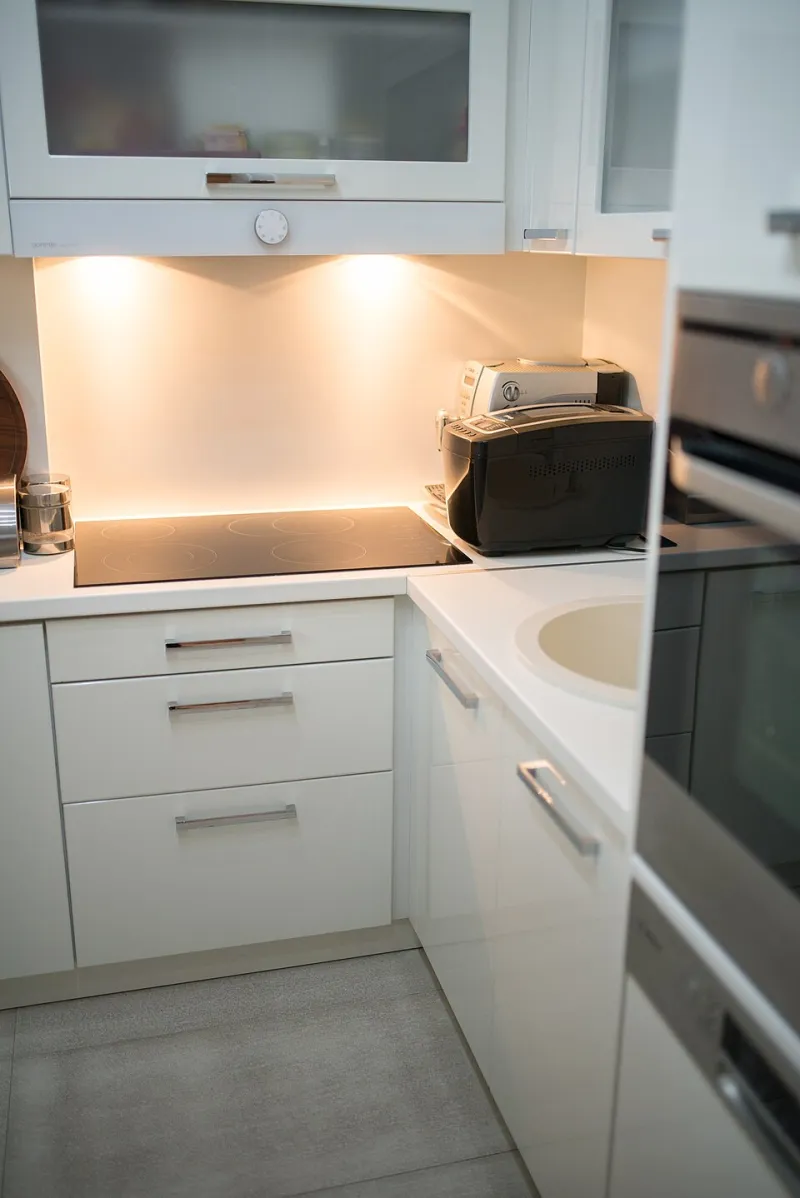
Photo: Shixart1985, CC BY 2.0, via Wikimedia Commons
Integrated appliances are the kitchen equivalent of a tailored suit. Everything lines up, nothing shouts, and the whole room looks as if someone with a plan was in charge. That is a genuine design win. The catch is that a tailored suit comes with tailoring bills, and a built-in kitchen comes with a second invoice that rarely appears next to the price tag.
This is not an argument against integrated appliances. It is an argument for doing the maths properly before you fall for a showroom run of flush cabinet fronts. The purchase price is only the deposit. The real cost is spread across installation, access, ventilation, repairs and the day the appliance eventually gives up.
The price tag is only the deposit
A freestanding fridge or dishwasher arrives as a complete object. You pay for it, it gets wheeled in, and apart from a plug socket and a water connection it mostly looks after itself. An integrated model is half appliance, half joinery project. The appliance may be cheaper than a fancy freestanding equivalent, but the cabinet door, hinge kit, filler panel and fitter's time are not included in the box.
That is where the first hidden cost sits. Built-in appliances often need cabinet carcasses adjusted, plinths cut, worktops trimmed or door fronts aligned. If your kitchen is older, slightly out of square, or built around a different appliance size, a joiner may need to bridge the gap between what you bought and what your cabinets can actually accept. None of that is unusual. It is just rarely priced into the shopping trip.
Before comparing integrated and freestanding models, ask for an installed cost, not a product cost. Include the appliance, the cabinet door if needed, hinges, any carpentry, delivery, old appliance removal and the electrician or plumber if connections need moving. That total is the honest starting point.
Cabinet surgery is not free
Integrated appliances hide behind furniture, which means the furniture becomes part of the appliance's working life. A dishwasher door that is slightly too heavy for its hinge, a fridge door that catches on a nearby handle, or a cabinet panel that swells after a small leak can all turn a simple repair into a two-trade job.
There is also the question of what happens when a cabinet door is discontinued. Kitchen ranges change every few years. If one door front gets damaged, you may be hunting for a matching panel long after the appliance itself is still going strong. Freestanding appliances have their own cosmetic risks, but they do not usually require a matching cupboard door to look right.
Repair access: the cost of a tight squeeze
This is the hidden cost that catches people out most often. An integrated appliance is designed to be tucked away, but repairs still need access. An engineer may need to remove the cabinet door, pull the appliance forward, or reach a valve or plug that was installed with optimism rather than maintenance in mind.
Some repairs are straightforward. Others involve dismantling part of the kitchen before the actual fault can be diagnosed. If the appliance is on a fused spur behind a cabinet, or the isolation valve is boxed in, a simple job can become a longer visit. Ask a blunt question before buying: if this appliance fails, how does someone get to it without damaging the kitchen? If the answer is vague, the design needs another look.
Ventilation and the quiet bill
Built-in ovens, fridges and washing machines all need to manage heat and moisture. Integrated models rely on gaps, plinths and cabinet design to keep air moving. When those gaps are blocked, performance drops and running costs can creep up. A fridge that cannot shed heat works harder. An oven packed into a tight cabinet with poor airflow can affect nearby units over time.
This is not usually dramatic, but it is cumulative. The energy label tells you what the appliance uses in a test setting. Your kitchen cabinet tells you what it will use in real life. If the installation instructions specify clearance, treat those measurements as part of the product, not optional paperwork.
Replacement: when 600mm is not 600mm
Kitchen appliances are often described as standard size, but standard is a loose word. A nominal 600mm integrated appliance may still differ in height, depth, hinge position, door-fixing method or plinth clearance. When the original model is discontinued, the replacement may fit the hole but not the cabinet door, or fit the cabinet but not the worktop.
Freestanding appliances are not immune to size changes, but they are easier to swap. You measure the gap, check the dimensions, and slide the new one in. Integrated replacements can involve new hinges, new door panels or a joiner's visit. Before committing to an integrated model, check how long that model or its cabinet-fitting system is likely to remain available. It is not the most exciting research you will do this year, but it is cheaper than discovering it at the worst possible moment.
Freestanding is not automatically ugly
There is a persistent idea that freestanding appliances ruin a kitchen. Sometimes they do. But a well-chosen freestanding fridge or dishwasher can look perfectly deliberate, especially in smaller UK kitchens where every centimetre is doing three jobs. Freestanding appliances are generally easier to repair, easier to replace and easier to take with you if you move. They also make it simpler to compare running costs across brands, because you are not paying for a cabinet door and a fitting kit at the same time.
Integrated appliances make sense when the design is the point, the cabinets are sound and the budget allows for proper installation. They make less sense when the kitchen is being squeezed into a tight budget and the hidden costs have not been counted.
Questions to ask before you sign
- What is the total installed cost, including cabinet alterations and door fronts?
- Can the appliance be isolated and removed for repair without dismantling the kitchen?
- Does the installation need clearance gaps, and are they included in the cabinet plan?
- Are the cabinet doors a standard size and finish that can be replaced later?
- What are the exact dimensions of the replacement models likely to be available in five to ten years?
- Does the integrated model actually run cheaper than the freestanding alternative, or are you paying mostly for the look?
The sensible split
Integrated appliances are not a con. They are a design choice with a longer financial tail than many buyers expect. The smart approach is to price the whole life of the appliance, not just the shiny bit in the showroom. If the total still works, buy with confidence. If the maths only works because the cabinet work, repair access and future replacement have been left out, that is not a bargain. It is a second invoice waiting under the counter.