Little Lights, Real Bills: The Kitchen Standby Audit Worth Ten Minutes

Photo: kitchen appliances standby lights plug-in energy monitor UK, via s3-media0.fl.yelpcdn.com
Open your kitchen at night and you will see them: the tiny red eye on the microwave, the blue glow under the coffee machine, the clock on the oven. None of it looks expensive. That is the trick. Standby power is the appliance equivalent of a dripping tap — small, steady and easy to ignore until you add it up. In 2026, with electricity still doing that thing where it never quite feels cheap, a ten-minute audit is worth doing.
What 'off' actually means in a UK kitchen
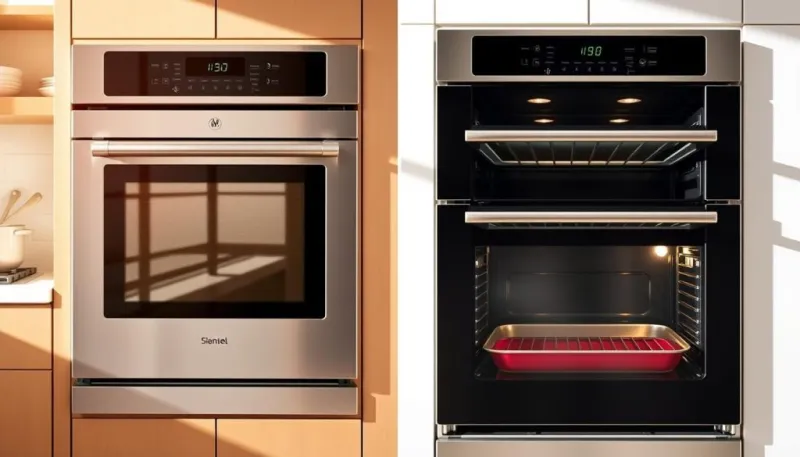
When an appliance says it is off, it often is not fully off. It may be keeping a clock alive, remembering your settings, listening for a smart-home command, or running a display. Some coffee machines keep a small warmer or boiler element ticking over. Some ovens maintain a network connection so an app can wake them up. Even a dishwasher may sit there drawing a watt or two while its display waits for instructions.
This is usually called standby power or phantom load. Modern appliances are generally better than older ones, and many have a low-power standby mode, but 'generally better' is not the same as 'nothing'. A kitchen with five or six appliances each drawing 2–5W can still add up to a noticeable sum over a year.
The ten-minute audit
You do not need an electrician. You need a plug-in energy monitor, a bit of patience and a note of your electricity tariff. A basic monitor costs £15–£25 and sits between the wall socket and the appliance plug. Some smart plugs also log energy use, though cheap ones can struggle to read very low watts.
Here is the routine:
- Pick a quiet moment when the kitchen is not in use.
- Plug the monitor in and connect one appliance at a time.
- Put the appliance into its normal 'off' or standby state — not unplugged, just the way it sits overnight.
- Note the wattage after a minute or two. If it flickers between values, take a rough average.
- Write down the appliance and its standby watts.
- Skip the fridge-freezer, and do not go poking around hardwired appliances or fused spurs if you are not sure what you are doing.
If your monitor cannot read below 1W, do not panic. Either use the manufacturer's standby figure or assume a small draw and focus on the appliances that clearly register. The point is to find the obvious offenders, not to produce a laboratory report.
The usual suspects
Microwave clocks are a classic. A simple clock might draw 2–4W. An oven clock or display might draw 2–5W. A coffee machine with a hidden warmer or a small boiler can be much higher — 5–15W is not unusual, and some older models are worse. Smart ovens and connected appliances can draw a few watts just to stay in touch with your phone. Dishwashers and washing machines are often modest, maybe 1–3W, but the display still counts.
Kettles and air fryers are usually zero when switched off because they have no clock or memory. That is the good news. The bad news is that the appliances with the most convenient little features are often the ones with the little bills attached.
The maths, without the drama
Once you have a wattage, the annual cost is simple:
watts × 24 hours × 365 days ÷ 1,000 × your pence per kWh
At around 25p per kWh, a few common standby draws look like this:
| Standby draw | Annual energy | Approx. annual cost at 25p/kWh |
|---|---|---|
| 1W | 8.76 kWh | £2.19 |
| 3W | 26.28 kWh | £6.57 |
| 5W | 43.8 kWh | £10.95 |
| 10W | 87.6 kWh | £21.90 |
| 15W | 131.4 kWh | £32.85 |
| 20W | 175.2 kWh | £43.80 |
If your tariff is nearer 30p, add roughly a fifth to those figures. If it is lower, the numbers soften. Either way, the pattern is clear: a single 15W coffee machine warmer running day and night is not a rounding error. It is a small appliance's worth of electricity spent doing nothing useful.
Switch it off, or leave it alone?
Not every standby load is worth fighting. The fridge-freezer must stay on. Anything hardwired, or sitting on a fused spur you do not understand, is best left alone. A smart oven that receives safety updates or a washing machine that needs to keep its settings may also be worth leaving in standby, especially if switching it off at the wall causes hassle.
The stronger candidates for a wall switch are simple devices with no real need to stay awake: a coffee machine with a hidden warmer, an old microwave with a bright clock you never use, a radio or small appliance charger in the kitchen, and perhaps a second fridge or drinks cooler in the garage if it is not needed all year. If the plug is easy to reach and the appliance does not need power for a clock, timer, update or frost cycle, switching it off at the wall is a reasonable habit.
Just do not turn it into a daily wrestling match. If you have to climb behind a cupboard every morning, the saved pounds will feel like a chore. Put the effort where the watts are.
The cheap fixes that beat a spreadsheet
Use switched sockets where you can, or a single switched extension lead for a cluster of low-power kitchen gadgets — but only if it is rated for the job and not overloaded. Look for eco or standby settings in appliance menus. Turn off pointless displays. If you use a coffee machine at the same time every morning, a timer plug may be worth considering, but check the manufacturer's instructions first. And label the plugs so nobody unplugs the router by mistake while hunting for the microwave switch.
A realistic target is not zero standby. It is cutting the obvious 10–20W that serves no purpose. That could easily be £20–£50 a year, depending on your tariff and how many little lights you are feeding. Not a fortune, but not nothing either — and it takes about as long as boiling the kettle.