The White Coat on Your Kettle: Hard Water, UK Homes and the Bills That Hide in Plain Sight
Hard water is one of those household facts that tends to get noticed in the wrong order. First comes the white ring in the kettle. Then the cloudy glasses. Then the washing machine that smells faintly of nothing much and the boiler that starts making a noise like it has opinions. By the time anyone looks up their water hardness, the limescale has already been quietly settling in.
None of this is a disaster. Hard water is not a health hazard, and millions of UK homes live with it perfectly happily. But it is a running-cost issue, and in 2026 it is worth understanding because the difference between a soft-water postcode and a hard-water one can show up in your energy use, your detergent bills and, eventually, the lifespan of your appliances.
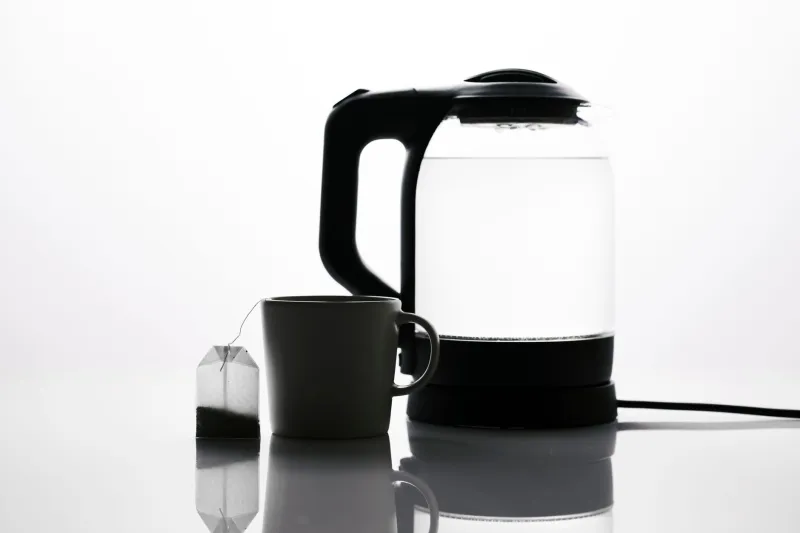
It starts with a ring in the kettle
Limescale is calcium carbonate. When water containing dissolved calcium and magnesium is heated, those minerals come out of solution and cling to hot surfaces. That is why the kettle element furs up first, why the dishwasher heating element and glassware suffer, and why the washing machine's heater and drum can collect a crust over time.
Scale is a poor conductor of heat. A scaled kettle element has to work harder to boil the same amount of water. A scaled washing machine heater takes longer to bring the wash up to temperature. A scaled dishwasher uses more energy to heat water and can leave glasses looking permanently smudged. None of these effects is dramatic on a single cycle, but they are cumulative, and they are happening in the background.
The other cost is chemical. Hard water reacts with soap and detergent, so you often need a little more product to get the same result. That is why dishwasher salt exists, why laundry detergents are dosed differently in hard-water areas, and why some people find that their washing smells less fresh even when the machine looks clean.
Why your postcode matters
Water hardness in the UK is not uniform. Broadly speaking, the south and east of England are harder, while Scotland, Wales, Cornwall, Devon and much of northern and western England tend to be softer. London, Surrey, Kent, Essex, Hertfordshire, Bedfordshire, Cambridgeshire, Norfolk, Suffolk and parts of the Midlands are classic hard-water territory. If you have moved from Manchester to Milton Keynes, your appliances have moved into a different job.
Hardness is usually reported in milligrams per litre of calcium carbonate, or mg/L CaCO3. As a rough guide, under 60 mg/L is soft, 60 to 120 is moderately soft to slightly hard, 120 to 180 is hard, and above 180 is very hard. Your water supplier publishes a postcode checker, and it is worth two minutes of your time. It won't tell you exactly what is coming out of your tap on a given day, but it will tell you which game you are playing.
The two-minute at-home hardness check
You do not need a lab kit to get a decent clue. Fill a clear bottle with about 100ml of tap water, add a few drops of liquid soap, and shake it for ten seconds. If it lathers readily and the bubbles hang around, your water is probably softer. If it goes flat quickly, leaves a scummy film or refuses to make much foam, you are likely in harder water. It is not forensic, but it is useful.
You can also just look at the kettle. A thin white film after a week or two is a fairly honest indicator. The same goes for the dishwasher door, the shower head and the hot tap. If you have a combi boiler and live in a hard-water area, the plate heat exchanger is the part to keep in mind, because that is where scale can affect hot-water performance.
Where hard water actually costs you
Kettles are the visible cost. A furred element means longer boils, and if you boil a full kettle several times a day, the seconds add up. It is rarely a headline figure on its own, but it is easy to fix and it makes the point.
Washing machines are the bigger long-term story. Scale on the heater reduces efficiency, and hard water can make detergent work less effectively. That can push people towards hotter cycles or extra product, both of which cost money. It can also contribute to the dull, stiff feeling that gives hard-water laundry its reputation.
Dishwashers are simpler: without enough salt, you get clouding, poor drying and scale on the element. The salt setting is not decorative. If your machine is set too low for your water, you are paying for a dishwasher that is working below its best.
Boilers and hot-water systems are the expensive end of the conversation. Scale in a combi boiler's heat exchanger can reduce hot-water output and efficiency, and in hard-water areas it is one more reason to keep up with servicing. This is not a reason to panic, but it is a reason to know your water.
The ranked fixes, cheapest first
1. Descale the kettle regularly. Citric acid is cheap, food-safe and effective. Every four to eight weeks in a hard-water area is a sensible starting point. Fill, boil, leave it to work, rinse. It costs pennies and takes minutes.
2. Use dishwasher salt properly. Check the hardness setting in the machine's menu and adjust it to your area. Use rinse aid as well. This is one of the cheapest interventions in the kitchen and it directly protects the dishwasher and your glasses.
3. Dose laundry detergent for your water. Follow the bottle for hard water rather than soft, and run an occasional hot maintenance wash if the machine manual allows it. Do not overfill the drum. If your machine has a hardness setting, use it.
4. Consider a jug filter for drinking water and the kettle. It won't protect the washing machine or boiler, but it can reduce scale in the kettle and improve the taste of tea and coffee. Replace the cartridge on schedule, or it becomes a false economy.
5. Look at a whole-house softener if you are in a very hard area. This is the big-ticket fix. A softener is typically installed at the incoming mains, uses salt and needs some space. It can reduce scale across the whole house, but it is not cheap and it is not automatically the right answer for every home. If you have a combi boiler, check with the manufacturer and your installer before assuming softened water is suitable.
The payback question
A whole-house softener can cost several hundred pounds to install, plus salt and maintenance. The payback comes from longer appliance life, less descaling, lower detergent use and, potentially, better boiler efficiency. In a very hard-water area with a busy laundry and a family bathroom, the maths can work. In a softer area, or a small flat with low hot-water use, it may never pay back.
The cheaper fixes are different. A bag of citric acid, a box of dishwasher salt and a correctly dosed detergent are low-cost habits that protect the appliances you already own. They won't turn hard water into soft water, but they stop the scale from getting comfortable.
A sensible 2026 routine
Check your supplier's hardness figure once. Set the dishwasher salt level accordingly. Descale the kettle when you see the first film, not when it looks like a geological sample. Use the right detergent dose for your water. Keep the boiler serviced. And if you are buying a new washing machine or dishwasher in a hard-water area, factor in the running cost of salt, descaler and detergent rather than just the sticker price.
Hard water is not a villain. It is just a local fact that most appliance running-cost estimates ignore. Once you know your postcode's number, the fixes are mostly cheap, mostly simple, and mostly a matter of doing them before the scale does the deciding for you.