Your Freezer Defrosts Itself — And Quietly Adds It to the Bill
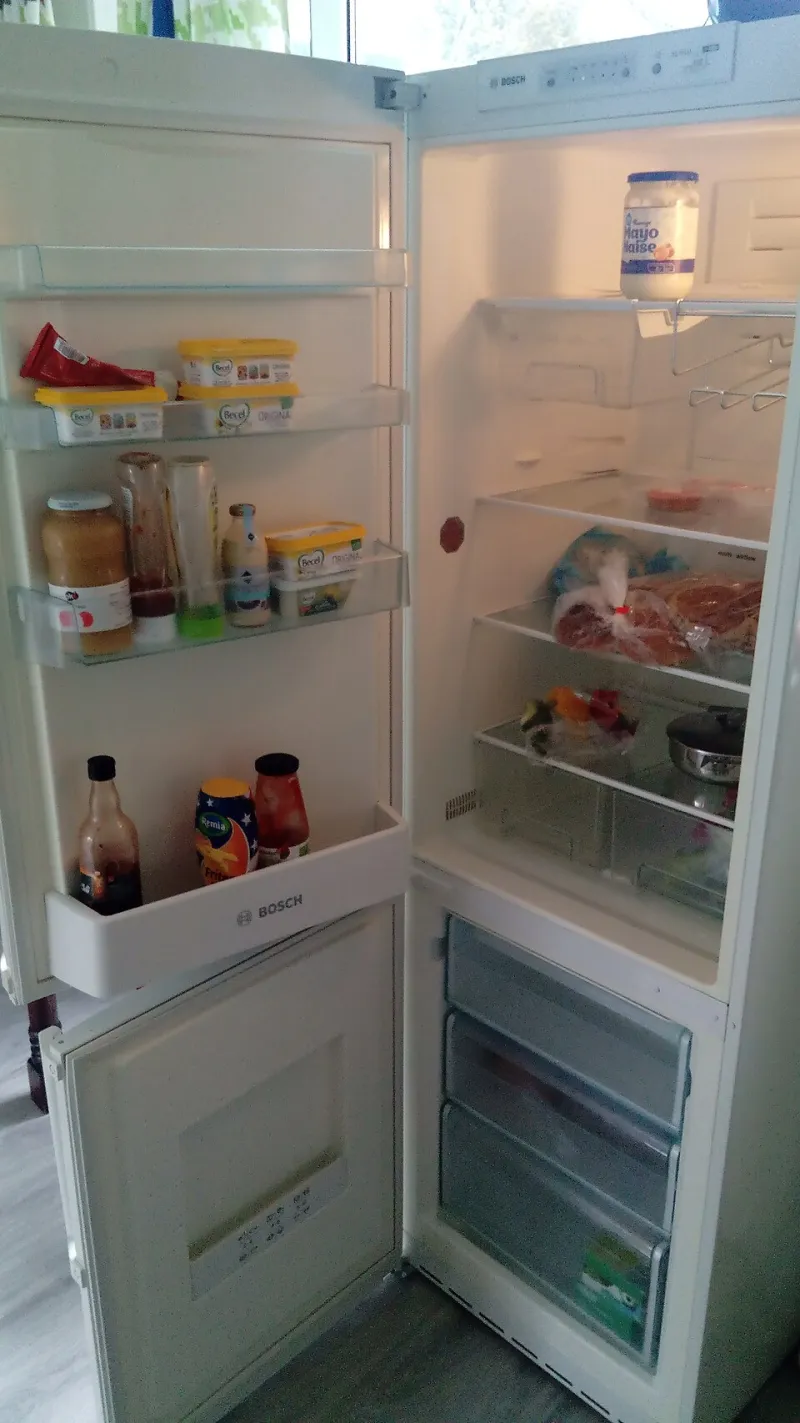
Photo: Donald Trung Quoc Don (Chữ Hán: 徵國單) - Wikimedia Commons.(Want to use this image?), CC BY-SA 4.0, via Wikimedia Commons
You did not buy a heater. You bought a freezer. Yet somewhere behind the salad drawer there is a small element that fires up a few times every day, warms a set of coils, melts a bit of ice, and then quietly hands the job back to the compressor. That is what 'frost-free' means in practice, and it is the least discussed running cost in the whole appliance aisle.
None of this is a scandal. Auto-defrost is one of the genuinely good ideas in modern refrigeration. But if you are weighing up a tall frost-free freezer against a chest freezer you have to bend over to reach, the numbers matter — and the label on the door does not tell the whole story.
What is actually happening back there
A freezer does not stay ice-free by accident. Every time you open the door, warm, damp kitchen air drifts in. That moisture settles on the coldest surface in the cabinet, which is the evaporator coil, and freezes. Left alone for a year, it becomes the familiar rock-hard glacier that used to require a kettle, a towel and a free afternoon.
A frost-free model deals with that automatically. On a timer or a sensor trigger, the control board shuts off the compressor and energises a small defrost heater — usually somewhere between 150W and 300W on a domestic freezer, higher on some large American-style units. A fan moves air across the coil, the frost turns to water, the water drains into a tray near the compressor where it evaporates, and then the compressor starts again to pull the temperature back down.
A single cycle is cheap. Roughly 200W for twenty minutes works out at about 0.07 kWh — under 2p at current capped rates. Repeat it three or four times a day, every day, and you are looking at somewhere in the region of £18 to £25 a year for the melting alone. Then add the fan, the standby draw of the control board, and the extra compressor effort needed to recover after each warm spell.
That is the bit nobody puts on the box.
Why the energy label stays quiet
The kWh/annum figure on the label is not dishonest. Defrost energy is included in the standard test, so it is baked into the number you see. What the label cannot do is separate it out, or tell you how often that heater will fire in your particular kitchen, at your particular humidity, with your particular teenagers opening the door to see if there is ice cream.
It also cannot tell you why a frost-free cabinet of a given size tends to quote a higher annual consumption than an equivalent manual-defrost model. Take two similar-capacity freezers: a 250-litre frost-free tall unit might sit around 230–280 kWh a year, while a comparable manual chest freezer could be quoted nearer 150–190 kWh. At roughly 24–25p per kWh, that is £20–£30 a year before anyone has touched a door handle.
When frost-free genuinely earns its money
There are households where that premium is money well spent, and it is usually about behaviour rather than specs.
If your freezer door opens ten or fifteen times a day — a busy family kitchen, a house with small children, anyone who cooks from frozen most nights — the frost-free cabinet wins on convenience by a mile. In a warm, humid kitchen, especially through a British summer, moisture load climbs and the manual alternative ices up faster than the manual says it will.
It also wins if you know, deep down, that you will not defrost a manual freezer until the drawers stop closing. A neglected manual freezer with a centimetre of ice on the walls can easily burn more than a frost-free model you never think about. Ice is insulation where you do not want insulation.
And there is the plain fact of drawer organisation. Being able to see what you own, rather than excavating it, tends to reduce waste — which is a running cost too, just one that never appears on a spec sheet.
When a manual chest freezer still comes out ahead
Manual-defrost chest freezers keep their lead for a simple physical reason: cold air is heavy and stays put when you lift the lid. Little spills out, little moist air gets in, and there is far less for a heater to melt.
If you batch cook, buy a half lamb from a farm shop, or keep a long-term store that you dip into twice a week, a chest freezer in a cool, dry, frost-free spot is still the cheapest way to freeze food in a UK home. You pay for it with a defrosting session roughly once a year, when the ice reaches about 5mm — and that session is far less painful if you do it on a cold morning with the contents in a cool box.
One caveat, since it comes up constantly: if the plan is a garage or outbuilding, check the climate class before you buy anything. Plenty of freezers are unhappy below 10°C, and an underperforming compressor is a bigger bill than any defrost heater.
Three things that move the maths more than the spec sheet does
Room temperature. Every degree above roughly 20°C makes the compressor work harder, and warmer air holds more moisture for the defrost heater to deal with later. A freezer in a 25°C utility room is a different proposition to one in a cool north-facing kitchen.
Door openings. Each swing of the door lets in humid air that must first be frozen out of the food, then melted off the coil. A minute of browsing costs more than the defrost cycle it eventually triggers. Deciding before you open is genuinely a money-saving habit.
Fill level and airflow. A reasonably full freezer holds the cold well, which reduces compressor cycling. But pack it so tightly that the vents are blocked and you will get uneven temperatures and more frost in the wrong places. And never put warm containers straight in — that is a direct order to the defrost heater.
A sensible way to decide
Ignore the marketing badge and do three things. First, compare the kWh/annum figures of the frost-free model you like against a manual alternative of similar size. Second, add around 10–15% to whichever number you pick, because real kitchens are not test labs. Third, be honest about your defrosting discipline.
If the annual gap is £25 and you would never defrost a chest freezer, frost-free is the cheaper choice in practice. If the gap is £25 and you quite enjoy a Sunday morning with a scraper and a cool box, the manual cabinet is quietly doing you a favour.
Neither is the 'right' freezer. The right one is the one whose running costs match the way you actually live — heater, fan and all.