The Repair Maths Most UK Households Skip (And How To Run It In Ten Minutes)
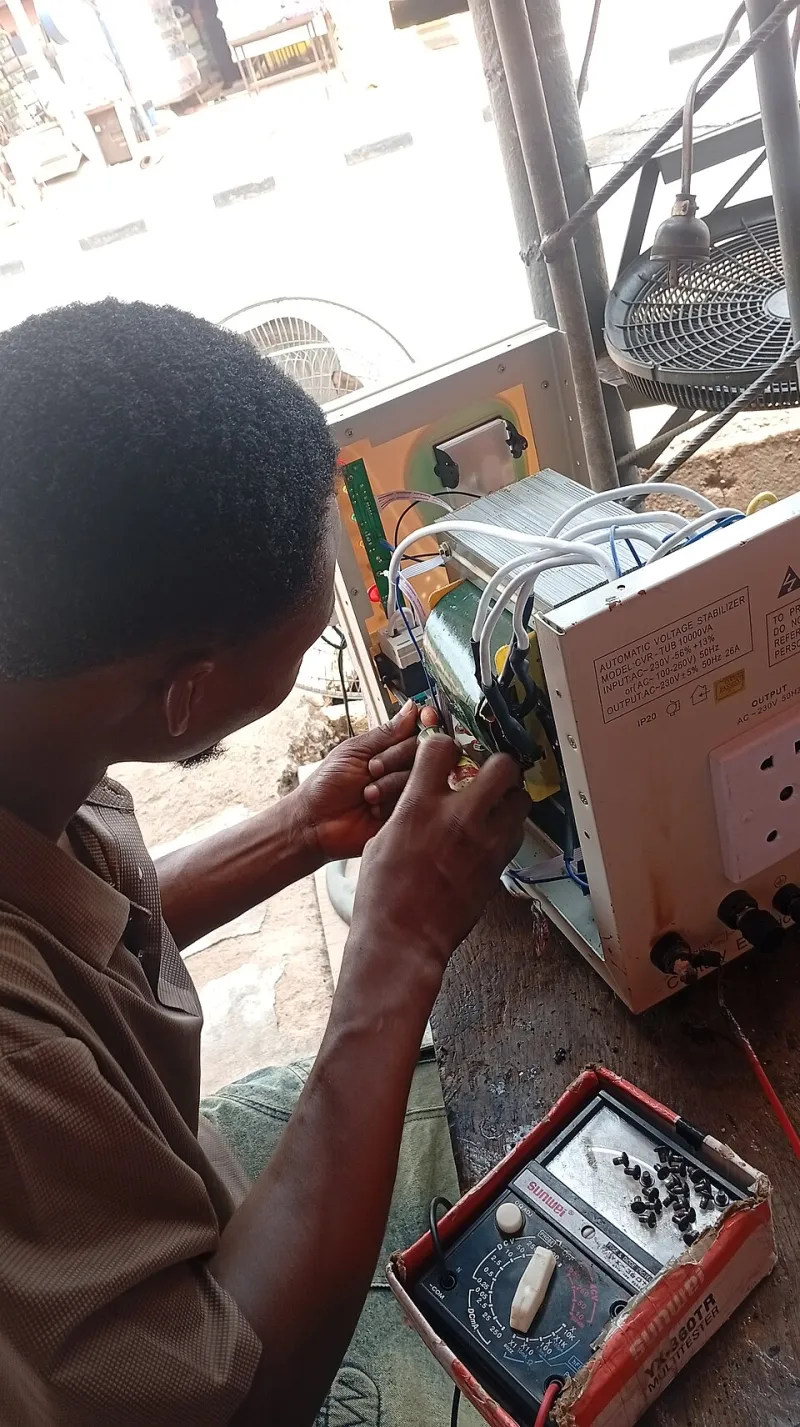
Photo: Bigcee007, CC BY-SA 4.0, via Wikimedia Commons
When an appliance starts misbehaving, the first question is usually emotional: do I trust it any more? The better question is financial and environmental: what will the next five years cost if I repair it, and what will they cost if I replace it? That calculation does not need a spreadsheet. It needs ten minutes, a model number and a few realistic numbers.
Start with the five-year question
A repair quote is not the whole story. A replacement price is not the whole story either. Compare the two paths over five years: repair cost, likely running costs, possible second repairs, purchase price, installation and disposal. The cheapest immediate option is not always the cheapest option overall, but replacing a serviceable appliance is rarely a financial shortcut either.
The Appliance Village scorecard
Score each row from 0 to 2. A total of 7 or more leans towards repair. A total of 3 or less leans towards replacement. Anything in the middle deserves a second quote.
| Check | 0 points | 1 point | 2 points |
|---|---|---|---|
| Age | 10+ years | 6–9 years | 0–5 years |
| Repair cost vs replacement | Over 60% | 30–60% | Under 30% |
| Parts availability | Scarce or discontinued | Mixed | Common and easy to source |
| Warranty or guarantee | None | Partial | Active |
| Efficiency gain from new model | Large | Modest | Small |
This is a guide, not a rule. A safety recall or a leak near electrics changes the decision. So does a repair that keeps failing.
What repairs actually cost in 2026
Prices vary by region, brand and fault, but these ranges are realistic for UK call-outs and common parts.
| Appliance | Common repair | Typical repair cost | Typical replacement cost |
|---|---|---|---|
| Washing machine | Control board or drum bearing | £150–£300 | £350–£700 |
| Dishwasher | Pump or control board | £120–£300 | £400–£800 |
| Fridge-freezer | Thermostat or compressor | £100–£450 | £450–£900 |
| Oven | Element or fan motor | £80–£200 | £350–£800 |
If the repair is a simple element, pump or belt, fixing is often sensible on a machine under eight years old. If the fault is a sealed compressor, a main control board on a budget appliance, or water damage across several components, replacement starts to look stronger.
Parts availability and the age trap
Check the model number before you decide. Some brands keep spares for a decade or more. Others stop supporting certain boards much sooner. An eight-year-old appliance with a cheap mechanical part is a better repair bet than a five-year-old appliance with a discontinued electronic board. Ask the engineer for the part number and availability, not just a price. If the part is on a long lead time, factor in the cost of being without the appliance.
Warranty and guarantee terms
If the appliance is still under guarantee, use it. Do not pay for a repair yourself before checking the terms. Extended warranties deserve scrutiny too: a £150 policy on a £400 appliance may not make sense once you consider exclusions and call-out charges. A repair under £100 on a machine under five years old is usually straightforward to justify.
Efficiency gains are real, but rarely the whole argument
A new fridge-freezer will often use less electricity than a 12-year-old one. A modern washing machine may use less water and energy on eco cycles. But energy savings alone rarely repay a replacement within a few years. The bigger financial gain usually comes from avoiding an expensive repair on an appliance that is otherwise sound. There is also the environmental point: keeping a working appliance in use avoids the embodied carbon and materials of a new one.
Run the five-year calculator
For the repair path, add: repair cost + five years of running costs + a sensible allowance for a second fault. For the replace path, add: purchase price + installation and disposal + five years of running costs. Then compare.
Example: a nine-year-old washing machine needs a £220 repair. It costs about £55 a year to run. A new machine costs £450, costs about £40 a year to run, and needs £50 for installation and disposal. Repair path: £220 + £275 = £495, plus risk. Replace path: £450 + £200 + £50 = £700. If the part is available, repair is the better financial call.
Example: a 12-year-old fridge-freezer needs a £320 compressor. It costs about £90 a year to run. A new one costs £600, costs about £55 a year to run, and needs £40 for installation and disposal. Repair path: £320 + £450 = £770. Replace path: £600 + £275 + £40 = £915. Repair is still cheaper on paper, but parts availability and downtime may tip it the other way.
When fixing is usually smarter
Repair tends to win when the appliance is under six years old, the fault is common, the part is easy to source, and the repair is under 40% of replacement cost. It also wins when the appliance is integrated into kitchen cabinetry and replacement would mean altering units. And it wins on environmental grounds when the machine is otherwise efficient and well looked after.
When replacing is usually smarter
Replacement tends to win when the appliance is over ten years old, has multiple faults, or needs a repair costing more than 60% of a new model. It also wins when parts are discontinued, when there has been a safety recall, or when a fridge-freezer is leaking and rusting. If you have had two repairs in two years, stop and reassess rather than paying for a third.
The ten-minute routine
Find the model number. Get one repair quote. Check part availability. Check the warranty. Run the five-year sum. Then decide. The goal is not to keep every appliance alive forever, or to replace at the first hiccup. It is to spend money where it actually buys you reliability, lower running costs and fewer headaches.