Move-In Maths: Seven Appliances a First UK Home Genuinely Needs (and Five It Can Wait For)

Photo: Aaron Barlow, CC BY-SA 4.0, via Wikimedia Commons
There's a particular kind of panic that sets in when you get the keys to your first place and realise you own a bed, two saucepans and a novelty bottle opener. The internet is happy to fill that gap with recommendations for appliances you'll use four times a year.
So let's be practical. Below is the shortlist we'd hand to a friend moving into a one-bed flat in Leeds or a two-up-two-down in Cardiff — the kit that actually gets used, in roughly the order it starts mattering.
The seven worth buying
1. Fridge-freezer
Non-negotiable, and the one appliance where going cheap usually backfires. A poorly insulated model runs constantly, frosts up, and quietly eats your electricity budget at around 25p per kWh. Look at the energy label, check the usable litres rather than the headline figure, and measure the gap you've actually got — including door swing and the plug socket behind it. This is an invest-for-the-long-haul purchase.
2. Washing machine
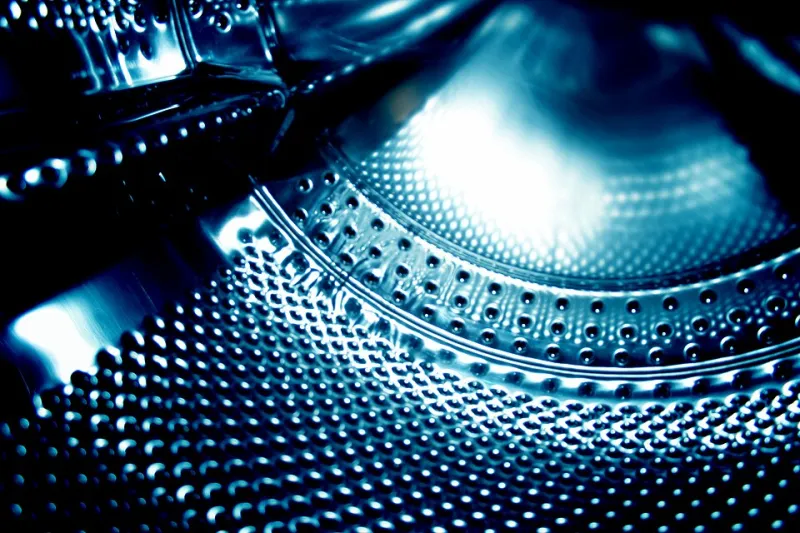
Unless your building has a communal laundry you're happy to pay for, a washer is essential. Mid-range is the sweet spot: 8kg drums, inverter motors, and a decent 30°C or eco programme. Cheap machines wash fine but spin loudly and die young. Watch the depth as much as the width — a 60cm cube won't fit under a worktop you assumed was standard.
3. Oven and hob
If you're renting, this is usually already there. If you're buying, a freestanding cooker is the least faff and the cheapest way to get both in one delivery. Induction hobs are quicker and easier to clean than ceramic, though check your pans are magnetic-compatible before you commit.
4. Kettle
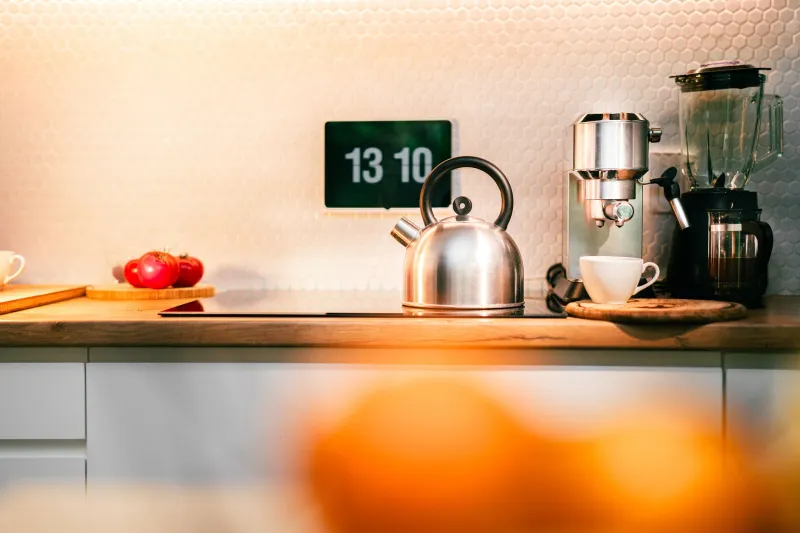
Cheap to buy, cheap to run, used twenty times a week. Buy one you like the look of and don't overthink it. A 3kW kettle boils faster but draws more power in the moment — the total energy used is broadly similar, so pick on feel and pour quality.
5. Microwave
Still the fastest way to reheat a plate of leftovers and increasingly the backup oven when you can't face heating a whole cavity for one portion. A basic 800W model does the job; combi versions are nice if you're short on oven space.
6. Vacuum cleaner
Floors don't clean themselves. Cordless is convenient for quick passes, corded is better for deep cleans and stairs — plenty of households end up with both. If you've got pets or carpet, prioritise suction and a decent filter over gadgetry.
7. Dishwasher
Contentious, but hear it out. In a shared household, a slimline or full-size dishwasher uses less water and less energy per wash than doing it by hand under a running tap, and it removes a genuine source of friction. If you're in a small flat and the answer is "no space", that's a fair verdict — just don't dismiss it on principle.
The five to leave on the shelf
- A tumble dryer. Unless you've got nowhere to hang washing, wait a winter and see how you cope. If you do buy, go heat pump — it costs more up front and far less to run.
- A wine cooler. Lovely idea, rarely earns its footprint in a first home.
- A bread maker. The romantic purchase of every new kitchen. It makes roughly six loaves before it becomes a shelf.
- A juicer. Cleaning it takes longer than drinking the juice.
- A second fridge or drinks cooler. Tempting in a heatwave, dead weight by October. Buy a cool box instead.
That last list isn't a ban — it's a delay. Live in the place for six months, notice what you keep wishing you had, then buy that thing properly.
Where to spend and where to save
Spend: fridge-freezer, washing machine, and anything you'll run daily for a decade. Long warranties and low running costs are worth real money.
Save: kettles, toasters, microwaves, and vacuum cleaners. These are mature technologies; a mid-priced model from a known brand is usually plenty.
Check before you buy: the width of your doorway, whether the plug socket is behind the appliance, and whether your landlord permits the change. Renters should also confirm who owns the existing white goods — you don't want to buy a fridge for a flat that's already got one in the garage.
The one thing people forget
Running costs compound. Two cheap appliances that each draw a bit more than they should will quietly add up over a year, and the gap between a bargain and a sensible mid-range buy is often smaller than the gap in your electricity bill. Read the energy label, check the decibel figure while you're there, and buy the boring thing that lasts.